March 30, 2026|י"ב ניסן ה' אלפים תשפ"ו Who Will Comfort Them? (Guest Post by Rebbetzin Yocheved Goldberg)
Print Article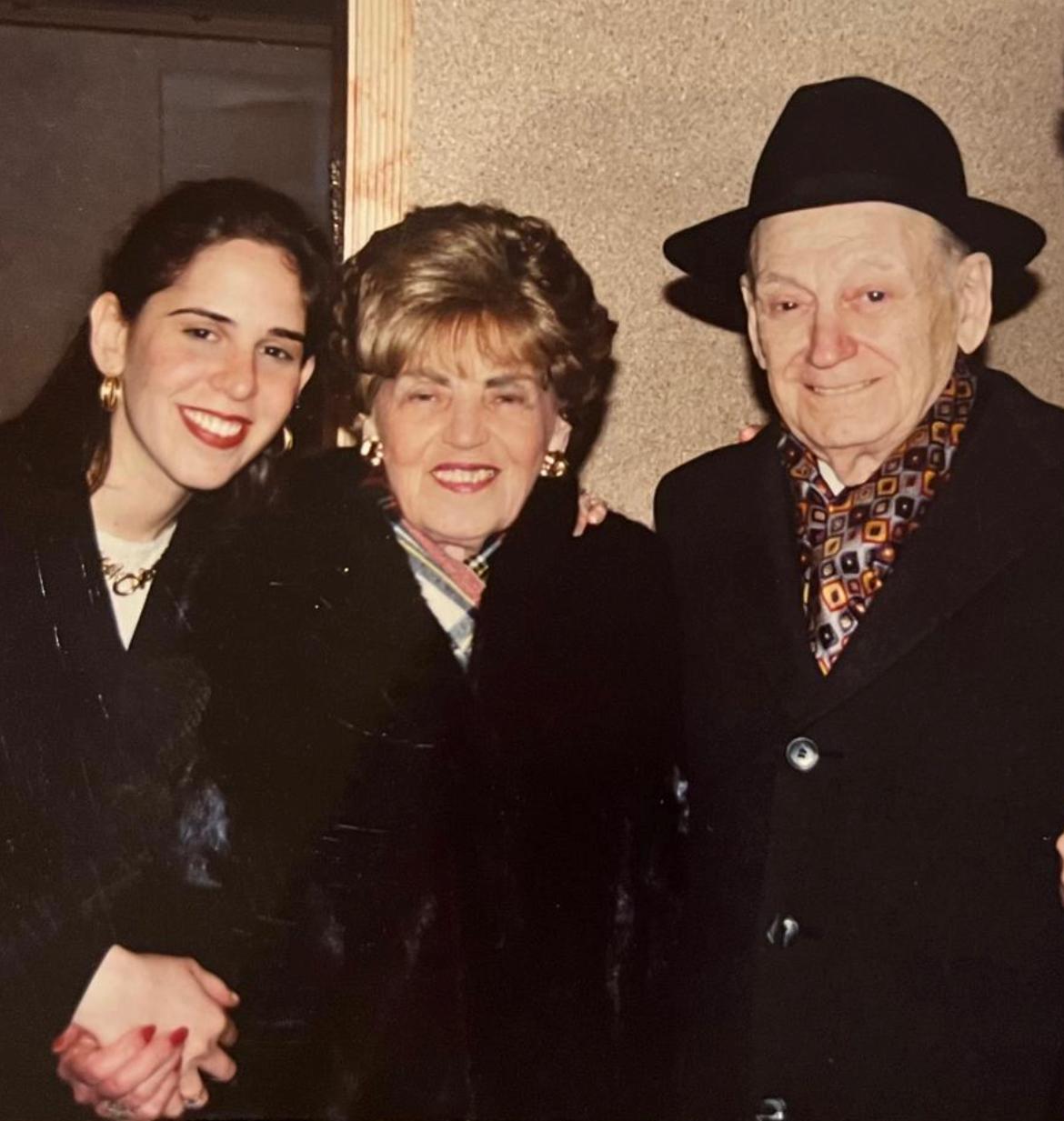
Most of my classmates were just like me, as were my neighbors, my cousins, and my campmates. Our grandparents spoke with accents or slipped easily into foreign languages when speaking among themselves. We didn’t really understand what it meant to have great-grandparents, because for many of us our extended families were small, and almost every family story seemed to begin somewhere in Europe.
This was simply our reality, all we knew, and no one ever questioned it. We didn’t compare ourselves to other versions of family life or wonder why things looked the way they did. We assumed this was how families were meant to look. It felt normal, because it was all around us, and so it barely registered at all.
Life moved forward steadily and safely, and whatever had come before felt distant and irrelevant to our sheltered world.
The house of my childhood was filled with familiar, comforting sounds: the scrape of chairs against the floor, the steady hum of the refrigerator, my father heading off to work each morning, my mother calling that supper was ready. It was a home defined by rhythm and routine, by predictability and practicality.
Threaded quietly through all of it were my grandparents, ever-present and firmly at the center of my life.
They were old; I knew that much even as a little girl. Their faces were etched with lines that didn’t quite match the calm, orderly rhythm of their days. They spoke with accents that shaped words in unfamiliar ways, and when they spoke to one another, they often used a soft, hushed Hungarian. They had only one child, my father, and there were no great-grandparents hovering at family simchos or peering out from clusters of faded photographs tucked into albums on the shelf.
But none of this felt unusual to me.
This was simply life as I knew it.
Only years later did I begin to understand how intentional that sense of normalcy truly was.
My grandparents had endured suffering that words could never fully contain, and yet they were determined not to place that weight on our shoulders. They wanted us to grow up light, protected, free to build lives unburdened by fear or dread. They believed fiercely in their grandchildren’s right to experience a childhood defined by safety and innocence.
Their strength lay not only in what they survived, but in what they deliberately chose not to pass on.
Our parents understood this instinctively. They did not ask questions. They did not press for details. They honored the silence as an act of love and kindness toward their parents.
We were all wrapped in that quiet agreement, sheltered by people who had every reason to be broken, but chose instead to move forward. Their need to rebuild was bound up with the need to keep going: to focus ahead, to keep their heads down, to get through each day.
My father himself grew up entirely within that protective cocoon. He had very little understanding of what his own parents had been through. Their silence about the details of their past was complete, and their determination to give him a normal childhood so absolute that he assumed his life story was entirely typical. He knew only what he saw: parents who worked hard, kept Shabbos and mitzvos, raised a child, and slowly built a future.
So complete was this illusion of normalcy that when my father reached his bar mitzvah, he assumed he would need to fast for the taanis bechorim. It was only then, confronted with that innocent assumption, that my grandparents were forced to tell him there had been children before him, that he was not the first child of my grandmother.
Until that moment, he hadn’t known.
Even then, it was not a story or an explanation, only a fact, shared briefly and quietly because it could no longer be avoided.
I grew up with that same sense of safety. The worst things I could imagine were a poor grade on a test or a misunderstanding with a friend. The world felt steady and predictable. People went to work, cooked dinner, laughed, made plans. No one spoke about horrors, not even those that had occurred only a few decades earlier.
And then, one Friday, sometime in fifth grade, something shifted.
I don’t remember what prompted it. Perhaps it was the date on the calendar, or perhaps a lesson that wandered into deeper territory. But my teacher began to speak about the Holocaust, not in passing and not in vague terms, but with a level of detail I had never encountered before.
I was a sensitive child, and the words pierced me. Images formed in my mind that I could not push away. I sat at my desk as tears streamed down my face, my chest tightening and my breath growing shallow. I tried to compose myself, embarrassed by my reaction, but I couldn’t stop.
Eventually my teacher noticed.
“Yocheved,” she said gently, “why don’t you go wash your face and take a few minutes?”
I nodded and slipped out of the classroom, but instead of returning, my feet carried me to the school office. I asked if I could use the phone.
When my mother answered, I told her what I had learned, the images, the pain that suddenly felt too big for me. And then I asked, “Can I please go to Babi and Zeidy for Shabbos?”
She understood and said yes.
That afternoon I packed a small overnight bag, and my father drove me to Rego Park, Queens. I was going alone, without my parents or siblings, just me and my grandparents. When I stepped off the elevator, there they were, waiting for me as they always did. I threw my arms around them as tears pooled again in my eyes, hot and unstoppable.
As we brought in Shabbos, I watched my Babi light her candles, her hands circling the flames, her lips moving in a whisper that carried generations. The house was filled with the familiar smell of Hungarian Shabbos delicacies in the air.
Later, at their Shabbos table, I sat with them, clutching their hands.
And I cried.
I cried for what I had learned. I cried because I couldn’t reconcile the people I loved, so warm, gentle, and present, with the suffering my teacher had described. I cried because the pain felt too large for my young heart.
And I will never forget how they responded.
They didn’t recount stories or relive horrors. They didn’t reopen wounds. Over and over again, calmly and steadily, they said, “Look at us, Yocheved. We’re here. We’re happy. We have you, your siblings, and your parents. We have everything we need, geloibt HaShem Yisbarech.”
They smiled. They squeezed my hands.
And somehow, impossibly, they comforted me.
Years passed.
After seminary, our class traveled to Poland, the culmination of an intense year of learning and growth. For a week we walked the places where history screamed from the ground itself, where families were torn apart, where humanity collapsed, where the unthinkable was carried out with chilling efficiency.
I thought I was prepared.
I wasn’t.
Every step, every barrack, every field dragged my thoughts back to my grandparents. I couldn’t understand them anymore. How did they survive this? How did anyone survive physically, emotionally, spiritually?
They had been here.
They had lost so much.
They had endured pain beyond imagination.
On the last day of the trip, I called my mother. “When I land,” I said, my voice breaking, “can we go straight to Babi and Zeidy?”
When I finally saw them, jet-lagged and raw, I fell into their arms and cried as I told them what I had seen and how shaken I felt.
And once again, they did what they had always done.
They reassured me.
They hugged me and told me they were okay, that they were happy, that they had built a family that gave them endless nachas, that they had everything they could want. They told me that life was good, geloibt HaShem Yisbarech.
They, survivors of the worst atrocity known to humankind, were the ones offering comfort.
Years later, my Babi comforted me one last time.
At the end of her life, she was in a hospital in New York. By then, I was living in Boca Raton with my husband and young family, far from my parents and grandparents. As they grew weaker, I carried a quiet ache of guilt and sadness that I couldn’t be with them as often as I wished, that time was slipping away.
Then my parents called to tell me she didn’t have much time left.
I booked a flight to fly in and out on a Thursday. My Babi had been unresponsive for days, and we knew this was the end. I didn’t expect anything from the visit. I simply wanted to be with her.
I sat by her bed and spoke softly, unsure if she could hear me. I told her about my family, about her great grandchildren, about my life. I told her how much I loved her.
Then, suddenly, I felt an arm move.
Slowly, carefully, with what must have been the last of her strength, my Babi lifted her arm and wrapped it around me.
She hugged me.
It was the same reassurance she had given me my entire life - at her Shabbos table, upon my learning about the Holocaust, after my trip to Poland.
I am here. You are loved. Everything will be okay.
Even at the very end, when her strength was gone, she was still doing what she had always done.
She was comforting me.
And in that moment, I understood something with sudden clarity.
This was not only who my Babi and Zeidy were.
This was the hallmark of their generation.
They knew how to mourn the past without drowning in it. They carried grief we cannot fathom, yet still built futures with trembling hands and unbreakable faith. Their comfort came not from denying pain, but from choosing life beyond it.
And perhaps this is what we mean every year at the Seder when we say, “בכל דור ודור חייב אדם לראות את עצמו כאילו הוא יצא ממצרים”, in every generation a person must see themselves as if they personally left Mitzrayim.
What does it mean to leave Mitzrayim?
Leaving Mitzrayim does not mean forgetting it. It does not mean erasing the slavery. It means carrying the memory- and still walking forward into the future.
My grandparents were a living Yetzias Mitzrayim.
And not surprisingly, the yomtov of Pesach was the time when my grandparents seemed most alive. My Babi spent days preparing alongside my mother, recreating the delicious foods of the alter heim, each dish carrying memories of a world that had once been theirs. My Zeidy looked regal at the head of the table, so anchored and serene, as he sang his familiar niggunim and retold the ancient story of how our people left Mitzrayim.
Only years later did I realize that for them it was never merely an abstract story from thousands of years ago. For them, the words of the Haggadah were not metaphor. They were memory. It was their own story as well. They too had walked out of a personal Mitzrayim only a few decades earlier. And now they were sitting at their Pesach table surrounded by family, free and safe, showing us that the Jewish people endure.
My grandparents did not deny the darkness, but they refused to let it define the future. After experiencing their own Mitzrayim, they forged ahead and built new lives. They created a home so steady and warm that their grandchildren felt only safety.
That is the deeper lesson of Pesach. Freedom is not the denial of hardship. It is the ability to move forward with the pain.
They gave us something priceless: the quiet assurance that if they could endure what HaShem set before them, then we, too, could overcome whatever lies in our path.
But now, as the world is growing colder, scarier, and more confusing, a question tightens my throat.
Who will comfort the next generation?
There are so few survivors left. Children may never sit at a Seder table with a grandparent who carries history in their eyes and hope in their smile. Great-grandchildren may know the stories only from books and videos, stripped of the living warmth of those who endured the pain and still chose joy.
Who will be their anchor? Who will show them what resilience looks like? Who will tell them, sincerely and with conviction, “We’re here. We’re happy. Everything is good”?
The answer is uncomfortable and unavoidable.
We will.
We are the bridge now.
We must take the emunah we absorbed simply by being near our grandparents and pass it on deliberately and consciously. We must tell their stories, model their strength, and live their lessons.
This generation needs to know that courage runs in their blood, that resilience is woven into their DNA, and that they carry within them the legacy of ancestors who survived the unsurvivable- and still sang zemiros at their Shabbos table.
The survivors once held our hands, embraced us and steadied us.
Now it is our turn.
We will comfort them.
Dedicated in loving memory to Yisrael Nosson ben Tzvi and Chaya Esther bas Eliezer Lipa