March 29, 2026|י"א ניסן ה' אלפים תשפ"ו When Life Feels Complicated, Choose Matzah
Print Article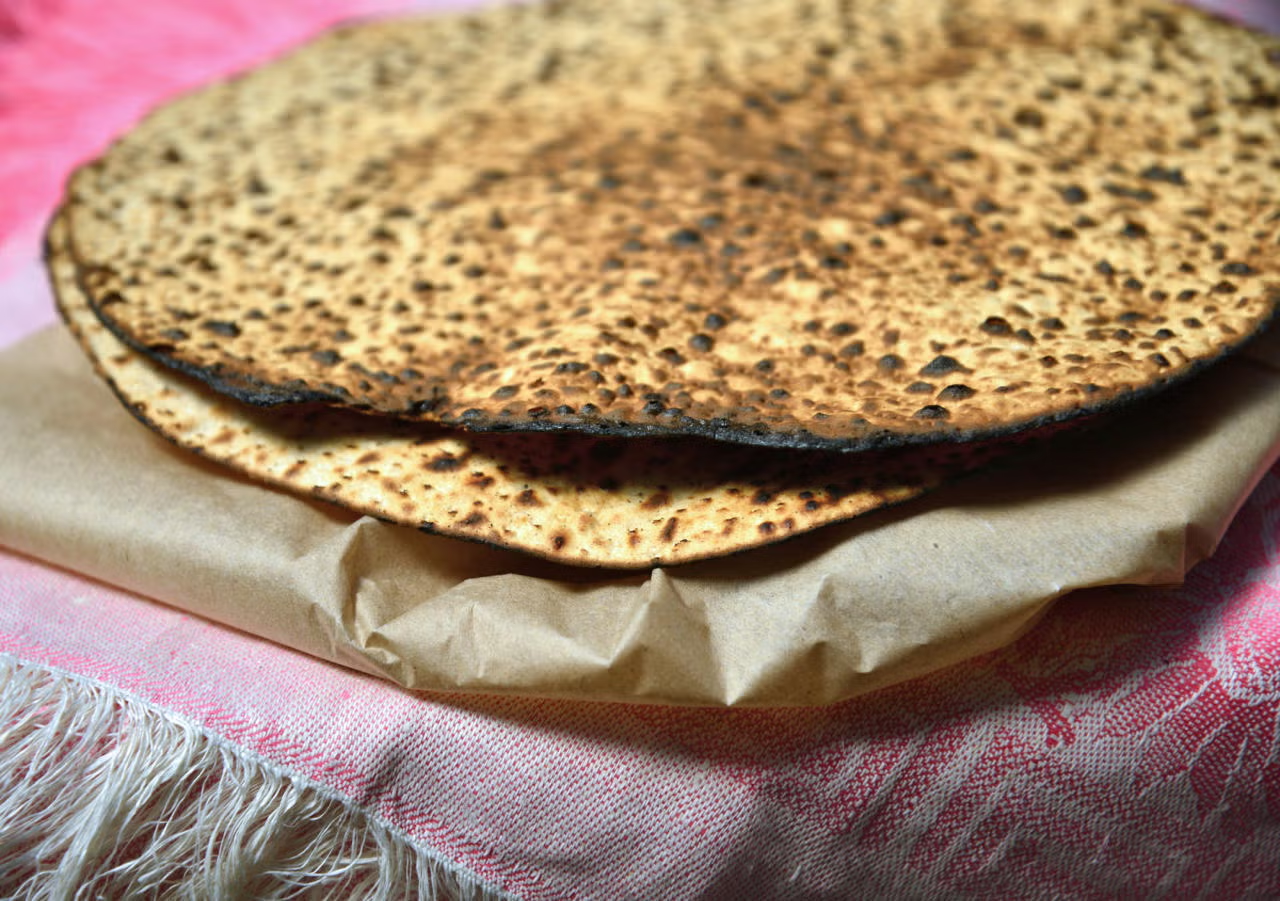
I once attended a funeral for a woman whose life had been marked by tension and complexity. There was a palpable strain among her children and grandchildren, and speaker after speaker, sometimes subtly and sometimes not, hinted at the conflicts she had introduced into the family. Then her son rose to speak. He paused, looked out, and said that his mother was complicated. He then looked at his siblings and said, let’s not be complicated. Let’s keep things simple. Let’s simply love one another, simply be loyal to one another, and simply get along with one another, and with that he sat down.
Sometimes we complicate that which we should keep simple.
Each year, as we recite Vehi She’amda, we say בכל דור ודור עומדים עלינו לכלותינו, that in every generation there are those who rise against us. We tend to imagine darker periods of history, or rising antisemitism in Europe, or threats from Hamas and Hezbollah. Yet increasingly, we are reminded that what should be morally clear is often treated as complex. But some things are not complicated. Some things are פשוט, simple.
The Torah commands that we eat matzah for seven days, describing it as lechem oni, bread of affliction. Matzah sits at the center of the Seder, yet it is deeply paradoxical. It symbolizes freedom, the bread over which we recline like royalty and recount our liberation, yet it is also called the bread of affliction. Beyond symbolism, it is strikingly plain. Made from just flour and water, any additional ingredient disqualifies it. No sweetness, no spice, no fermentation. Compared to the elaborate foods we celebrate, matzah is bland, imperfect, and simple. How can such a food represent royalty and freedom?
The Maharal of Prague addresses exactly this question and offers a profound answer. We tend to equate wealth and freedom with abundance, with more possessions, more experiences, more sophistication. But the Maharal teaches that the more dependent we are on external things, the less free we actually are. When we rely on comforts, stimulation, and complexity to feel satisfied, we become enslaved to them. True freedom is the ability to live without dependence.
Lechem oni does not mean bread of suffering, but bread of living with less. That state does not lead to deprivation but to liberation. When we are not reliant on extras, we are no longer controlled by them. Freedom is found in פשטות, in simplicity.
Judaism does not demand that we live this way all year. We do not eat matzah year round and there is nothing wrong with enjoying comfort and pleasure. But for one week, Pesach trains us to step back and detach from what we have come to see as necessities. It reminds us that many of the things we think we need are actually luxuries. That shift in perspective changes how we relate to everything.
Consider Warren Buffett. Now in his mid nineties and worth well over one hundred billion dollars, he has lived in the same modest home in Omaha for decades. When asked why he never upgraded, he said, “I’m happy there. I’d move if I thought I’d be happier someplace else.” “This house does just fine. I’m warm in the winter, I’m cool in the summer, it’s convenient for me. I couldn’t imagine having a better house.” His freedom is not defined by what he owns, but by what he does not need. He is not dependent on luxury to feel content.
This idea is spreading more widely. Across America, many people are stepping away from constant connectivity, trading smartphones for simpler devices. The appeal is not nostalgia but the desire to reclaim presence and clarity. People feel overwhelmed by the complexity and distraction of modern life and are searching for something simpler. People today are saturated with chametz and are searching for matzah.
Pesach itself reflects this reality. With fewer ingredients available, we often eat more joyfully. Children, with fewer toys, frequently find greater happiness, sometimes in the simplest things. The Brisker Rav would keep his matzos under lock and key before the Seder. When asked why, he cited the verse ושמרתם את המצות and explained that just as we protect valuable jewels, we must guard our matzos. The simplest food becomes the greatest treasure.
All year long, we complicate our lives by chasing more and adding layers that we think will enhance our experience. Pesach and matzah remind us that what is most simple is often most true and most valuable. The things that are most straightforward are the ones that set us free.
The safety of Jews, whether in Israel or around the world, should never be complicated. It is a matter of clarity, not nuance. We must not accept explanations that obscure what is morally obvious.
That is the message of matzah. If we want geulah, we need to bring more simplicity into our lives and into our relationships. Instead of making things more complicated, we can choose to keep them simple. We can choose to love one another, to be loyal to one another, and to live together with greater harmony.