May 18, 2026|ב' סיון ה' אלפים תשפ"ו The Letters Still Soar
Print Article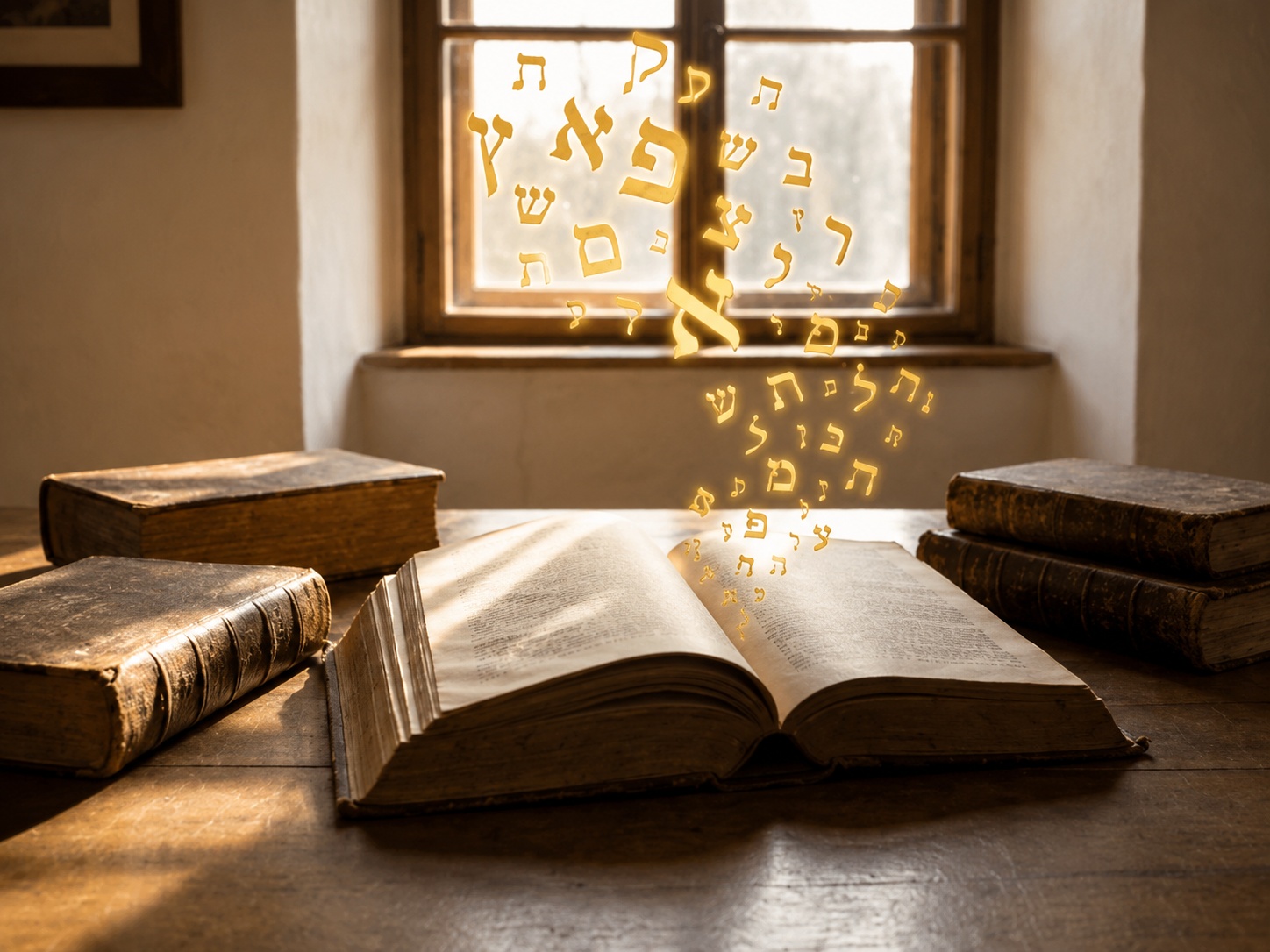
A year ago, the Jewish world followed the heartbreaking story of Tze’ela Gez, Hy”d. She and her husband, Chananel, were driving to the hospital for the birth of their fourth child when terrorists opened fire on their car. Tze’ela was critically wounded and Chananel was injured more moderately. At Beilinson Hospital in Petach Tikvah, doctors delivered their baby boy while fighting unsuccessfully to save his mother’s life. Tragically, Tze’ela passed away later that evening.
Before the attack, she had already told her husband the name she loved for the baby: Ravid. Chananel hesitated because their oldest son is named Lavi and the names sounded similar, but she insisted it was a beautiful name.
As the baby fought for his life, Chananel and his rabbanim gave him a name so Klal Yisrael could daven for him: Ravid Chaim.
That same day, Israeli forces tracked down the terrorist responsible for the attack. During the operation, the terrorist opened fire again and was killed. Afterward, the commanding officer came to update Chananel. Hearing that the baby had been named, he asked what the name was.
“Ravid Chaim.”
The officer became visibly emotional and stepped away. A few moments later he returned and quietly said, “My name is Ravid Chaim.” Chananel embraced him.
In a devastating continuation of tragedy, baby Ravid Chaim passed away after fighting for fifteen days. At the funeral in Yerushalayim, his father sang HaMalach HaGoel.
In moments like these, we struggle to understand what remains after so much has been shattered. There are moments in Jewish history and in Jewish life when grief feels unbearable and destruction appears complete. Yet the Torah teaches us that even when something sacred is broken, something deeper and more enduring survives.
When Moshe Rabbeinu descended Har Sinai carrying the luchos and saw the Jewish people worshipping the eigel, he threw the luchos from his hands and shattered them beneath the mountain. Chazal explain that at that moment the holiness had already departed. אותיות פורחות באויר. The letters had flown from the stone. The luchos shattered, but the letters endured.
That striking phrase appears one other time in Chazal. The Gemara in Avodah Zarah describes the martyrdom of Rabbi Chanina ben Teradyon during the Roman persecution of Torah study. Despite the decree forbidding Torah learning, he continued teaching publicly. The Romans wrapped him in a Sefer Torah and set him ablaze, surrounding him with wet wool to prolong his suffering.
As their rebbe burned before them, his students asked, “Rebbe, what do you see?” At first glance, the question seems strange. What was there to see? But perhaps they were asking something much deeper. What becomes of Torah when its enemies try to burn it? What remains of the Jewish people after destruction? What will be with us now?
Rabbi Chanina answered with words that have echoed throughout Jewish history ever since.
“גוילין נשרפין ואותיות פורחות. The parchment burns, but the letters soar.”
Torah always has two dimensions. There is the parchment and there are the letters. There is the physical form and there is the eternal spirit within it. The parchment can burn and the stone can shatter, but the letters, the ideas, values, faith, and covenant they contain, cannot be destroyed.
Perhaps this is one of the deepest messages of Shavuos. Kabbalas HaTorah was never only about receiving stone tablets or parchment scrolls. It was about receiving eternal letters. The Torah can be written on stone, parchment, paper, or screens, but its essence lives beyond the material that contains it. The physical form may change or even be attacked, but the Torah itself continues to soar through generations of Jews who carry it within them.
That is the story of the Jewish people. Empires have tried to erase us. They destroyed our Batei Mikdash, burned Batei Midrash, expelled communities, and murdered generations. Yet the letters continued to soar.
Perhaps Rabbi Chanina himself drew strength from Moshe Rabbeinu. Moshe understood that although the luchos could shatter, the letters would survive. The essence of Torah was never confined to stone.
Rav Asher Weiss notes that Chazal compare every human being to a Sefer Torah. We rise for both. We mourn both. Both possess sanctity beyond their physical form. A person too contains parchment and letters, a body and a soul. The body may perish, but the letters endure.
The word פורחות does not only mean “to soar.” It also carries the sense of blossoming and growth. The letters do not merely survive destruction. They continue onward. They take root elsewhere. They create new life.
That is true of Torah. It is true of the Jewish people. And it is true of those we have lost.
Chananel Gez described his wife by saying, “I was married to an angel.” He spoke about the countless people she helped through therapy, trauma counseling, anxiety treatment, and emotional support. Then he said something extraordinary. “We’re still learning from her after her death. We’re getting strength from her. We’re learning how to cope with tragedy from her.”
The terrorist destroyed Tze’ela’s body, but her letters still soar. Her kindness, her faith, her courage, her voice, and her impact on others were not buried.
At the heartbreaking funeral for Ravid Chaim, his father said it was time for the newborn baby to go back to his mother. He spoke of the unbreakable spirit of the Jewish people and their belief in God. After the burial, surrounded by grieving family, friends, and even strangers, Chananel began singing HaMalach HaGoel, the song parents sing to their children before sleep.
On Shavuos we celebrate not only that Torah was given once, but that it continues to live within us now. Every Jew who learns Torah, lives Torah, teaches Torah, and transmits Torah becomes part of those eternal letters.
These past years have been filled with war, loss, and rising antisemitism. Our enemies have attacked the parchment of the Jewish people. They have destroyed bodies, homes, and even communities. But they cannot destroy the letters.
The letters continue to soar even in hospitals and certainly in batei midrash, through soldiers and mourners, through parents singing HaMalach HaGoel at unimaginable moments of loss. They soar through every Jew who still believes, still learns, still builds, and still sings.
That is the promise of Torah and that is the story of the Jewish people.